Somebody at work told you their carpet was never the same after they had it cleaned. It buckled in the middle of the living room, and the company told them it was old carpet and there wasn't much to be done. Now you're wondering whether you're about to pay someone to wreck a floor that was doing fine.
It's a reasonable worry, and it isn't paranoia. Carpet can be damaged during a cleaning. We've been called out to La Vergne homes in Lake Forest Estates and Farmingdale Estates to look at floors that came out worse than they went in. But the cause is specific, it's known, and it's avoidable.
The short answer
Cleaning doesn't damage carpet. Water damages carpet.
Nearly every post-cleaning problem traces back to the same root, which is more moisture going into the floor than anyone could get back out. Understanding that one thing tells you most of what you need to know about avoiding it.
What happens when the backing lets go
Carpet isn't one piece of material. It's fibers stitched into a primary backing, with a secondary backing laminated to that using adhesive. The adhesive is what holds the whole sandwich together.
Soak that adhesive layer long enough and the bond starts to fail. The industry term is delamination, and once the layers separate the carpet loses its structure. It bubbles up in the middle of a room, ripples across traffic areas, or pulls away at the seams where two pieces were joined.
The frustrating part is the timing. Delamination usually doesn't show up the day of the cleaning. It appears a week or two later, by which point the connection to the cleaning is easy to deny. The homeowner gets told the carpet was old, or the installation was bad, or the humidity did it.
Shrinkage and the buckle nobody expects
There's a second failure mode worth knowing about, and it hits natural fibers hardest.
Wool carpet and some natural-fiber area rugs will shrink when they get thoroughly wet. As the fibers contract, the carpet pulls in from the edges, and something has to give. Sometimes it's the tack strip letting go around the perimeter. Sometimes the carpet pulls right off the strip and you can see the gap along the baseboard.
Jute-backed goods behave similarly. Jute is a natural fiber too, and it doesn't enjoy being saturated any more than wool does.
If you have wool anywhere in the house, tell whoever is quoting you. A cleaner who shrugs at that information is telling you something useful about how much attention they're going to pay.
Wicking, browning and the stain that comes back
Two more that are less serious but genuinely annoying.
Wicking is when a spot you thought was gone reappears a day or two later, sometimes bigger than before. What happened is that the stain went deeper than the cleaning reached. As the carpet dried, moisture traveled back up toward the surface and brought the deposit with it. The spot didn't survive the cleaning. It was pulled back up by it.
Browning is a discoloration, usually a tan or yellowish cast, that shows up on light carpet after it stays wet a long time. Natural tannins and materials from the backing migrate upward through the damp fibers and settle at the tips. It's most common on the sort of soaked floor that also risks the other problems on this list.
Both share the same cause as everything above. Extended wet time.
Why La Vergne makes the wet-time problem worse
Where you live affects how long a wet carpet stays wet. La Vergne sits near Percy Priest Lake, and summer humidity here regularly runs high enough that the air isn't pulling much moisture out of anything.
A cleaning that would dry out reasonably in a dry climate can leave padding damp for days here. That extends every risk window on this page and adds the mildew smell on top. Local conditions aren't a small footnote to this. They're a real part of the calculation.
How to avoid all of it
Ask one question when you're getting quotes. How much water goes in, and how long until it's dry?
A carpet that was cleaned properly should be close to dry within twenty-four hours at the outside. If the answer you get involves fans running overnight or blocking off rooms until tomorrow, that's a lot of water going into your floor, and every risk described above is in play.
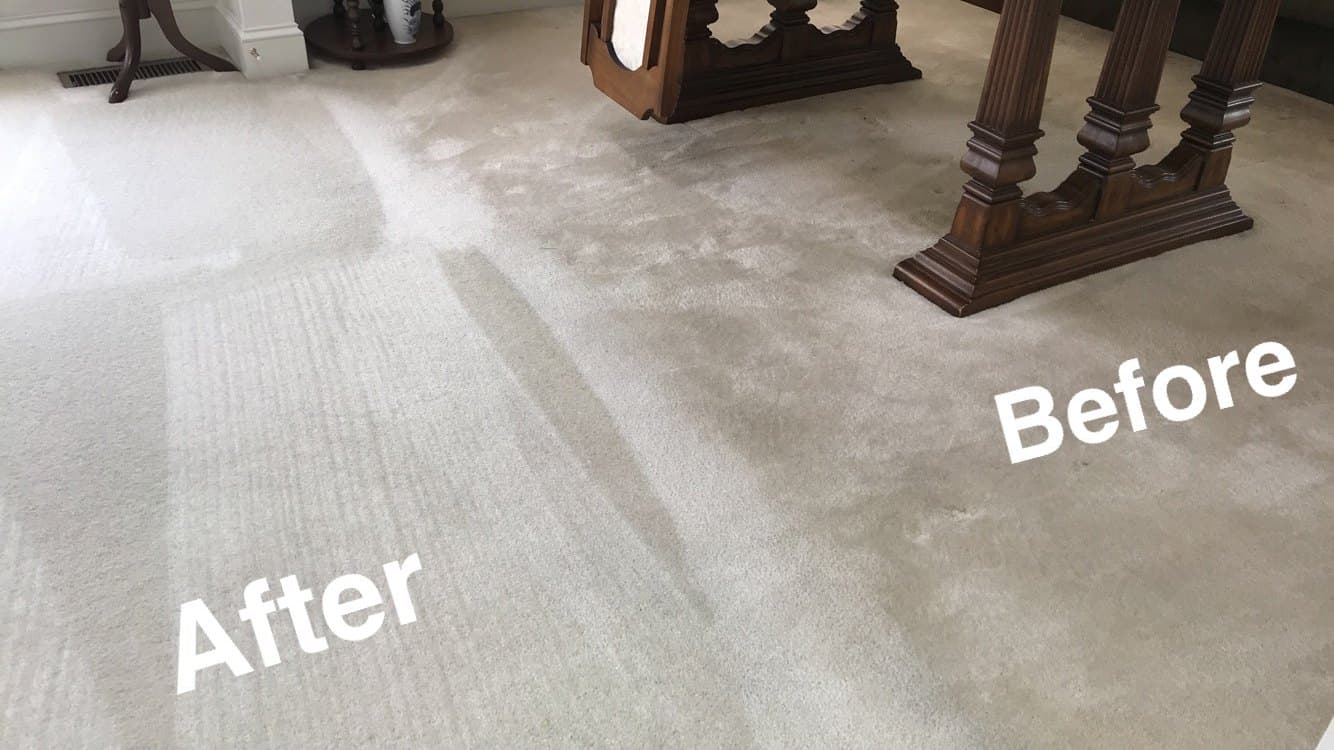
Safe-Dry's method is built to sidestep the whole category. We use a low-moisture process, so the water going in is a fraction of what extraction uses and the padding and adhesive layer never get saturated. Carpets are usually dry in an hour or two. There's no long wet window for the backing to fail in, for wool to shrink in, for a stain to wick back up through, or for mildew to start in.
Getting a straight answer in La Vergne
Your carpet is one of the more expensive things in your house, and a cleaning should add years to it, not take them off. Being cautious about who works on it is sensible. Just aim the caution at the right question, which is water volume and dry time.
Safe-Dry serves La Vergne and the surrounding Rutherford County towns, and you can see the full list on our service areas page. If you've had a bad experience before, or you have wool in the house and want someone to actually take that into account, call us at 615-455-5869 and we'll walk through it before anything gets scheduled.