
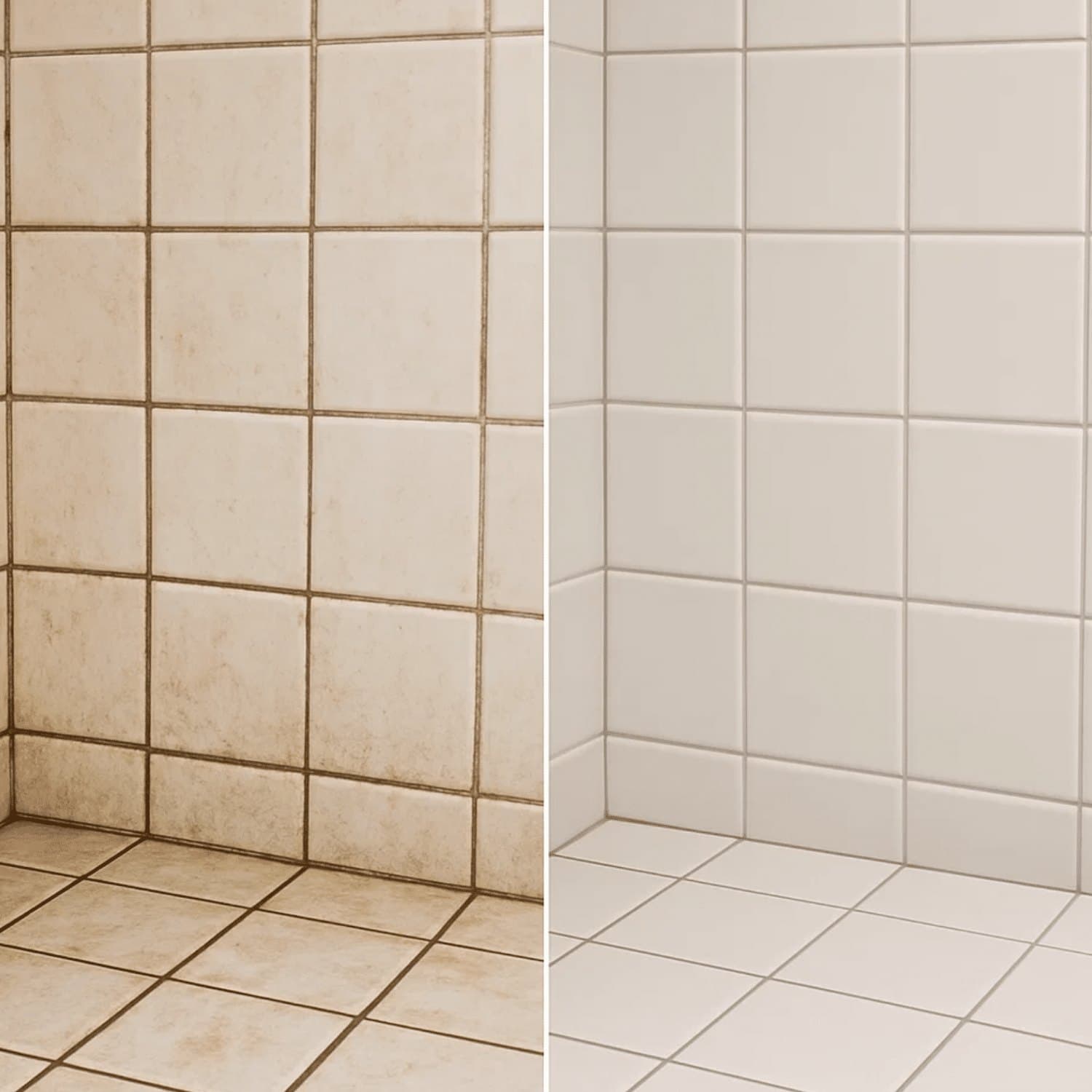
Once you notice it, you can't unsee it. Dark spots creeping along the shower grout, around the tub, or in the corners where tile meets caulk. It starts as a little shadow, then spreads into blotchy streaks that make the whole bathroom feel dingy even when everything else is spotless.
Here's the frustrating part. Grout lines are tiny but porous, so they hold moisture, soap residue, and body oils in ways smooth tile can't. Mold and mildew set up in the exact spots that are hardest to scrub. And if you've tried a quick spray or heavy bleach, you know the pattern, it looks better for a few days, then it's back.
Our crew has been helping Murfreesboro families keep surfaces cleaner for 30-plus years with a practical, family-safe approach. The goal is two things: remove what you can see, and control the moisture and residue that brings it back. Miss the second part and you're stuck in a loop.
What keeps feeding it
- Humidity and poor airflow after showers
- Soap scum and shampoo residue that feed growth
- Grout that's never been sealed, or has worn sealant
- Cracks in grout or failing caulk holding moisture
- Cleaning methods that leave film behind
Step by step
1. Confirm what you're seeing. Black grout staining is often mold or mildew, but it can also be trapped soil, soap scum, or old sealant breakdown. Check the worst spots, usually corners, lower wall tile, and the first foot around the shower floor. A musty smell points to moisture sitting too long.
2. Ventilate and protect yourself. Run the fan, open a window, wear gloves, and add a mask if you're sensitive to fumes. Keep kids and pets out. Never clean in a closed-up bathroom with no airflow.
3. Dry-clean first. Sweep or vacuum loose hair and grime before anything wet, so you don't turn dry soil into muddy streaks. A vacuum crevice tool along the floor edges helps.
4. Pre-wash the soap scum. A lot of "black mold" problems are made worse by soap scum, which holds moisture and traps dirt. Wipe the tile and grout with warm water and a little mild dish soap, let it sit 5 to 10 minutes, lightly scrub with a soft brush, and rinse.
5. Pick one cleaner and stick with it. Start with the least aggressive option that can work, hydrogen peroxide, oxygen bleach (non-chlorine), or a targeted bathroom mold cleaner used as directed. Use one product at a time and rinse before switching. Never mix bleach with ammonia or with acids like vinegar, the CDC warns that combining cleaners can create dangerous gases.
6. Scrub with the right pressure. Grout is porous and softer than tile, so aggressive scrubbing widens the pores. Use a nylon grout brush, short strokes along the grout line, moderate pressure. If the grout starts looking sandy or crumbly, stop, that's deterioration. Skip metal brushes and abrasive pads.
7. Rinse thoroughly. Leftover cleaner and soap film feed future growth. Rinse with clean water and wipe until the surface feels squeaky, not slick.
8. Dry aggressively. Mold thrives on moisture, so this step isn't optional. Towel off the surface, run the fan at least 30 to 60 minutes, and leave the door open for airflow. A small dehumidifier helps in humid weather. The EPA stresses that drying wet areas quickly is key to mold prevention.
9. Fix failing caulk and seal grout if needed. Some staining keeps returning because water's getting into cracks. Check the caulk at tub edges and corners, look for cracked or missing grout, and notice if grout stays dark long after the shower's off, that means moisture is penetrating. Re-caulk small areas if you're comfortable, or hire it out.
10. Know when to call a pro. If staining returns fast after cleaning and drying, if the grout is cracking or crumbling, if it's widespread and deep, or if you're tired of experimenting with products, professional service is the safer move.
Stop the comeback
The whole-home view matters here. Lots of Murfreesboro homes have tiled bathrooms next to carpeted hallways, and the same habits that beat grout mold, rinsing thoroughly, avoiding heavy soap buildup, and drying fast, also keep nearby carpets from holding onto musty odors.
For tile and grout, the long game is moisture control. Run the fan before the shower, keep it going after, squeegee the walls, and wipe corners a couple times a week. Pair that with safe, targeted cleaning and full rinsing and you'll get better results with way less effort.
If you've tried the DIY route and the dark grout keeps coming back, a deeper clean saves time and protects older grout from aggressive scrubbing. Check out our tile and grout cleaning service, then call Safe-Dry of Murfreesboro at 615-455-5869 or book online. Reach out here with questions.