You mop the floor, it dries, and there it is again: that cloudy haze under the lights, the grabby feeling under your socks, the dull streaks. We get asked about this constantly around Murfreesboro, especially in busy houses where kids run in from the yard and the dog tracks in half of Rutherford County.
Here's the thing most people miss. Film usually isn't dirty water left behind. It's residue. A lot of cleaners leave polymers, waxes, or soapy ingredients that never fully rinse off. Use too much product, even a good one, and it dries onto the surface. Hard water leaves a haze too. And the wrong mop just smears the same gunk from room to room. Too much water makes it worse, since wood and water don't get along and over-wetting pushes grime into the seams.
The fix is a controlled, low-moisture clean that lifts soil and dries evenly. Here's how we'd walk you through it.
Know your finish before you start
Hardwood can be sealed with polyurethane, oiled, waxed, or engineered with a top coat, and each one reacts to water differently. When in doubt, treat it gently: a pH-neutral wood cleaner, minimal water, and a test in a hidden corner first. Skip steam mops and flood mopping. Skip "shine" products too, because the coating they leave attracts dirt.
Dry-clean first
Before any liquid hits the floor, sweep or dust-mop up the grit. Tiny particles act like sandpaper under a wet pad. Hit the corners, entryways, and the spots around the kitchen cabinets where crumbs hide. A vacuum with a floor brush works, just no beater bar.
Spot-treat sticky areas
Dried juice, pet drool, a cooking splatter near the stove, those start as small patches. If you mop the whole room without dealing with them first, you spread that stickiness into a bigger cloudy mess. Mist a microfiber cloth (not the floor), wipe with the grain, then buff dry with a second cloth.
Use less product than you think
This is the big one. More cleaner does not equal a cleaner floor. Extra product is the fastest way to leave streaks. Follow the label exactly. If your tap water leaves a mineral haze, try distilled water for a couple of cleanings, it makes a real difference in a lot of local homes.
Control your moisture
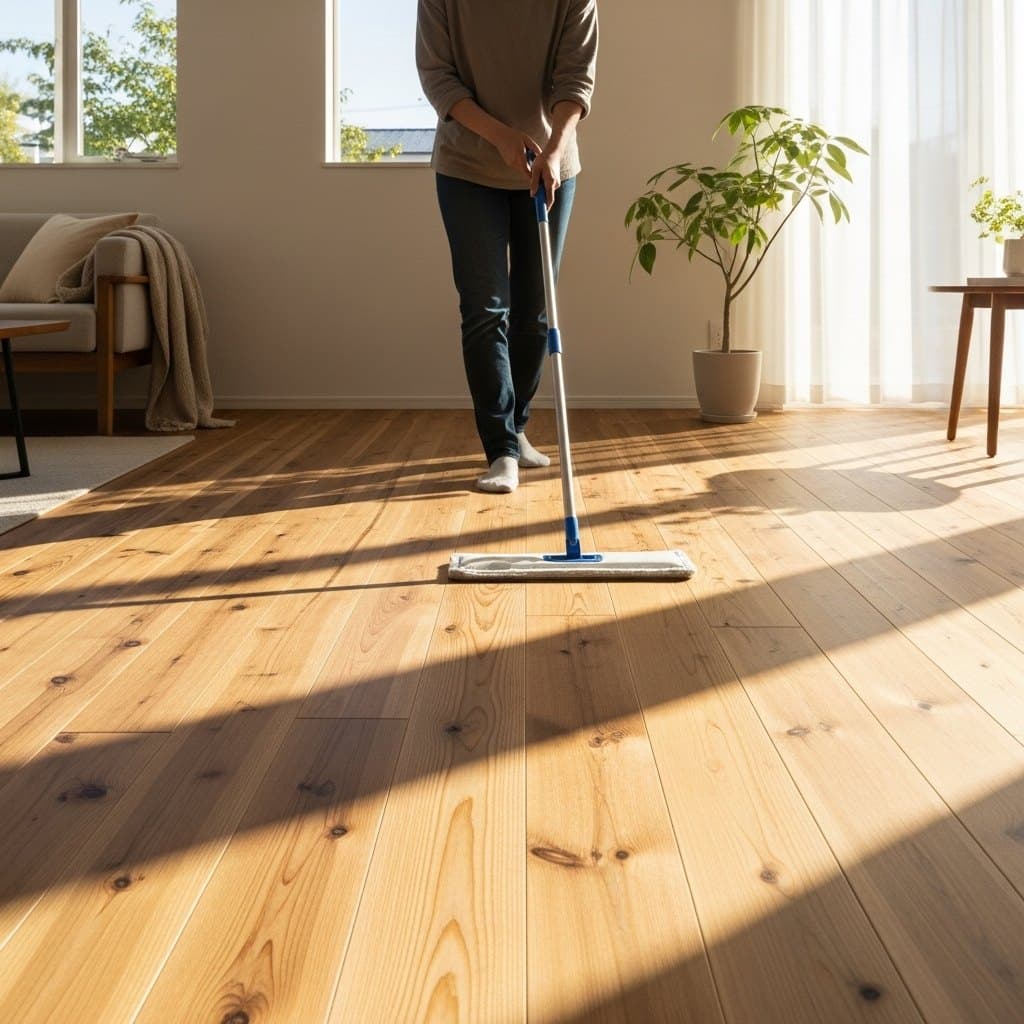
A flat microfiber mop with washable pads is the move. The pad should be lightly damp, not wet. If you can wring water out of it, it's too wet. If the floor looks wet behind you, you're using too much. Work in small sections, mop with the grain, and swap to a clean pad the second the old one looks gray.
Reset pass for stubborn haze
If you've been fighting film for a while, you're probably dealing with old buildup from past products. After your normal clean, take a fresh pad barely dampened with distilled water, wipe with the grain in small sections, then immediately buff dry. It lifts leftover residue before it dries back down.
Buff dry, especially in humid weather
A rainy stretch or high humidity slows drying, and slow drying leaves marks. A dry microfiber pass following the grain pulls up the last of the cleaner and gives you an even finish without any shine product.
When to call us
If film comes back within a day or two no matter what you do, if the floor stays sticky after a clean-water wipe, or if you just don't want to risk the finish experimenting with stronger stuff, that's our cue. We handle hardwood with a low-moisture, family-safe approach. See our hardwood floor cleaning service.
Want it done without the trial and error? Call Safe-Dry of Murfreesboro at 615-455-5869 or book a time online.